Machine learning for safety on construction sites

Motion Detection and Uncertainty

Malcolm Mielle

Objectives

  • Get familiar with theoretical problems and solutions and how they apply to real cases
    • Learn about Out-Of-Distribution
    • Learn about uncertainty quantification
  • But most importantly: get you excited about using science to solve real problems and make the world a better place.

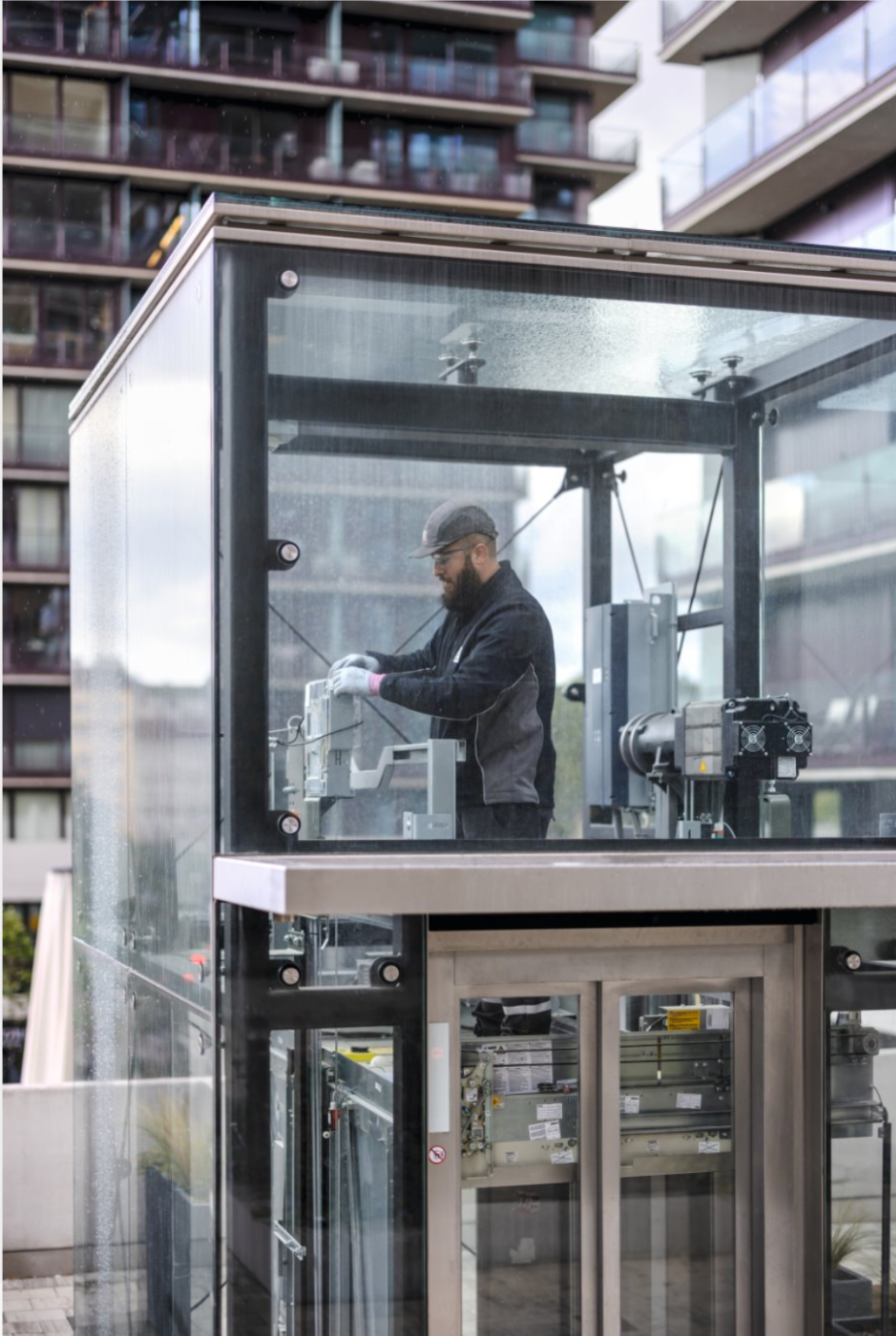
Schindler and Construction

Elevators are part of every construction site:

  • Moving materials
  • Moving people
  • Just a part of the building

Dangers

Construction sites are most hazardous work place:

  • Highest number of fatalities
    • EU
    • North America-OSHA
    • Over 22.5% of fatal work accidents occur in the construction sector (EuroStat).
  • One death is too many deaths

Context

What is the number one cause of accidents on construction sites

Context

What is the number one cause of accidents on construction sites

Not following existing safety processes.

  • Over-confidence​
  • Human errors​
  • Miscommunications​

Brainstorming

What ideas to solve this issue?

  • Real-time monitoring systems: Implement real-time monitoring systems using sensors to track worker movements and alert supervisors if unsafe behaviors are detected.
  • Training and education: Conduct regular training sessions for workers on safety protocols and the importance of following established safety processes.
  • Enhanced safety protocols: Develop and enforce stricter safety protocols, including mandatory use of personal protective equipment (PPE) and regular safety inspections.
  • Use of AI and machine learning: Deploy AI algorithms to analyze worker movements and predict potential hazards before they occur.
  • Safety audits and feedback: Implement regular safety audits and provide constructive feedback to workers to improve compliance with safety standards.

Issues with Motion Detection

  • Out-of-distribution detection
  • Uncertainty quantification and calibration

Working setup

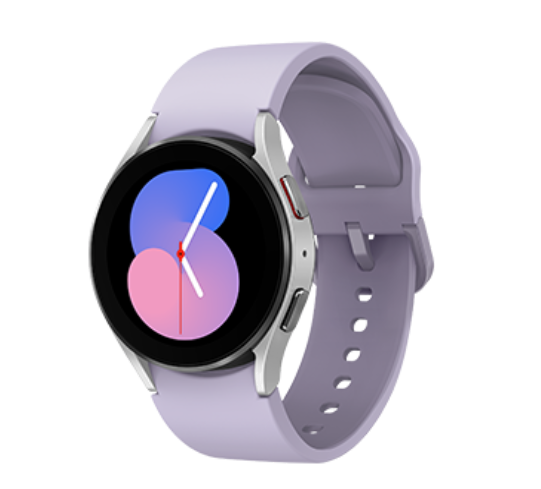
IMU sensor on smartwatch:

  • No privacy concerns
  • Cost efficient
  • Easy to install
  • Not sensitive to the environment

Working setup

Working setup
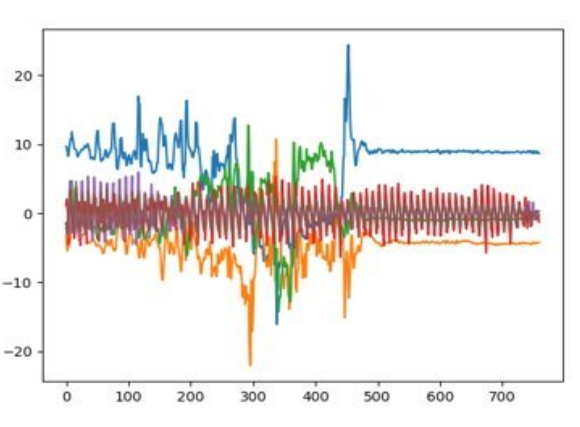
Sample 1
Sample 2
Sample 3

Working setup

Sample 1
Sample 2
Sample 3
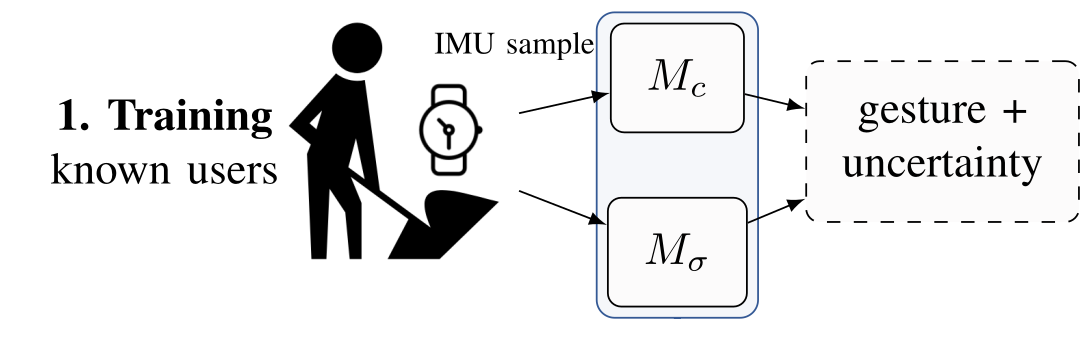
Gesture Prediction

Working setup

Working setup

IMU sensor on smartwatch:

  • No privacy concerns
  • Cost efficient
  • Easy to install
  • Not sensitive to the environment

Limitations:

  • Noisy data
  • Similar gestures

Domain Generalization
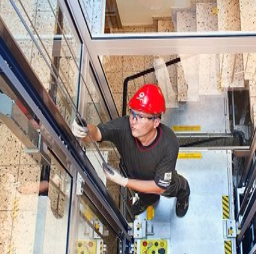
  • Over 60000 employees at Schindler
  • Impossible to collect data for all of them
  • Risk on the field are very high so need strong guarantees

Domain Generalization

Domain Generalization

Good

Domain Generalization

Good

New

Domain Generalization

Difficult scenario

Calibration and Uncertainty

Calibration is: the problem of predicting probability estimates representative of the true correctness likelihood

  • NN are overconfident
  • Danger for safety-critical applications

Uncertainty:

  • Epistemic: model uncertainty
    • Can be reduced with more data
  • Aleatoric: data uncertainty

Calibration and Uncertainty

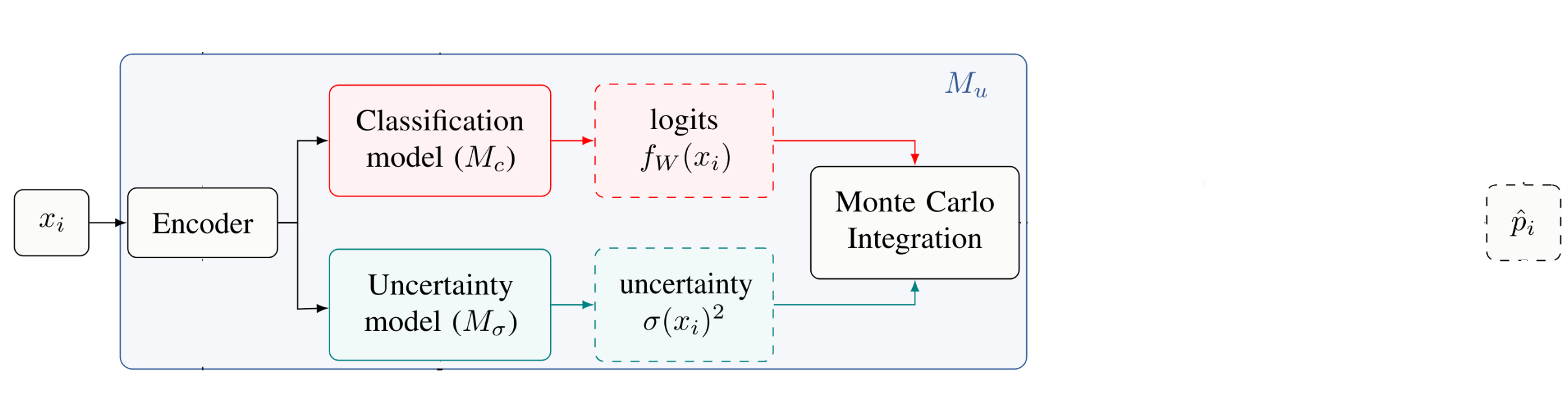
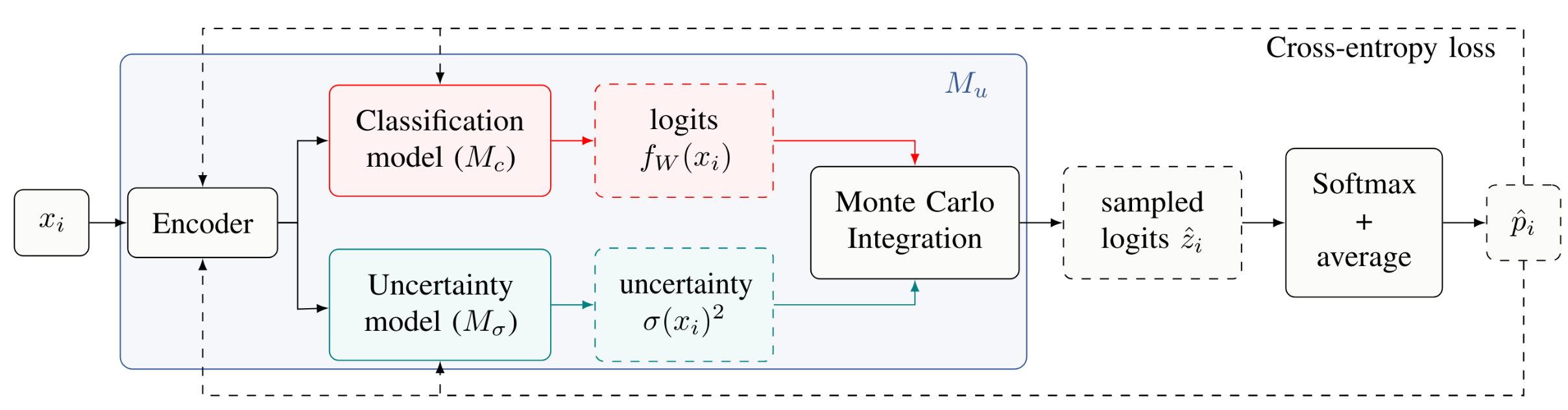
  • Temperature scaling: adjusts the logits by a temperature parameter T to make the predicted probabilities more calibrated.​

\(softmax = e^{(z/T)} / \sum_i e^{(z_i/T)}\)

  • Entropy maximization: penalizes overconfident misclassifications, helping align confidence with correctness.

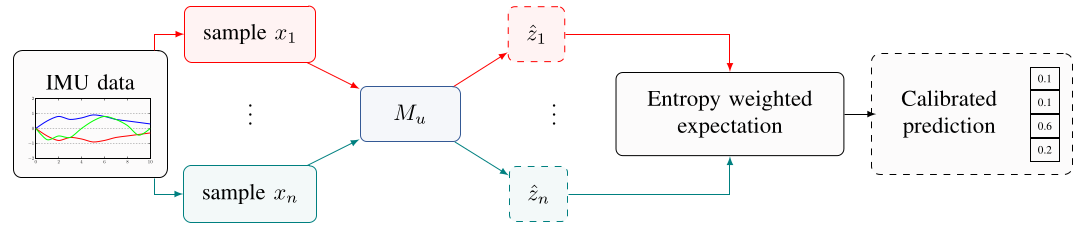
\(H_i = -\sum_{c=1}^{C} \hat{p}_{i,c} \log \hat{p}_{i,c}\) ​

  • Bayesian NN: applies bayes theory to neural network with weights represented as distributions.​

  • Ensemble methods: train multiple models and average their predictions to reduce uncertainty.​

Uncertainty-Aware Calibration

Uncertainty-Aware Calibration
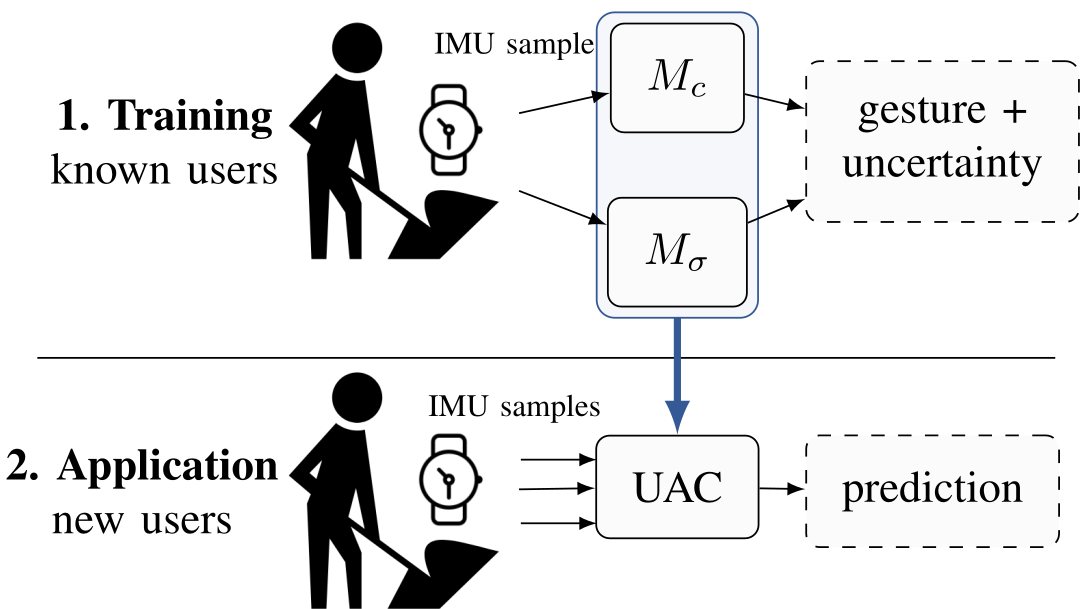
Uncertainty-Aware Calibration

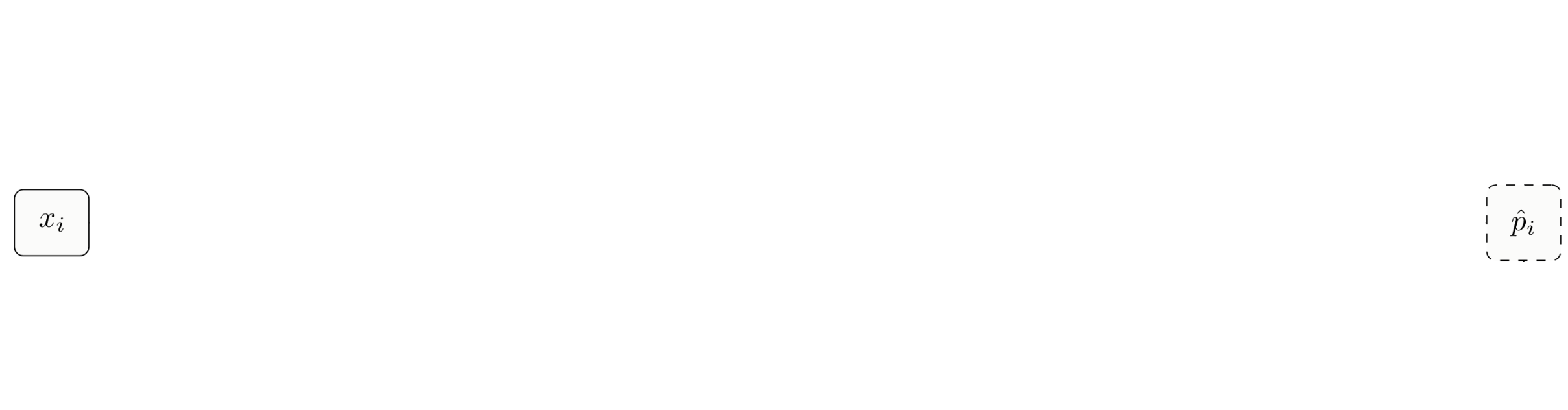
Step 1
Step 1
Step 1
Step 2
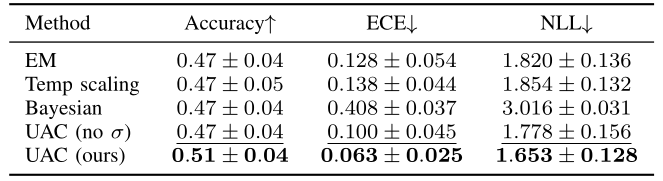
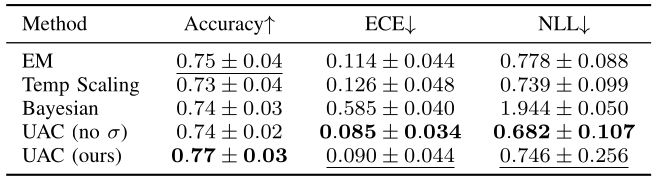
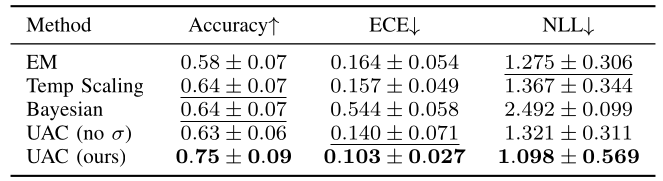
Results

  • Samosa1
  • USCHAD2
  • Widsm3

Results

References

Mollyn, V., Ahuja, K., Verma, D., Harrison, C., & Goel, M. (2022). SAMoSA: Sensing activities with motion and subsampled audio. Proceedings of the ACM on Interactive, Mobile, Wearable and Ubiquitous Technologies, 6(3), 1–19.
Weiss, G. M. (2019). Wisdm smartphone and smartwatch activity and biometrics dataset. UCI Machine Learning Repository: WISDM Smartphone and Smartwatch Activity and Biometrics Dataset Data Set, 7, 133190–133202.
Zhang, M., & Sawchuk, A. A. (2012). USC-HAD a daily activity dataset for ubiquitous activity recognition using wearable sensors. Proceedings of the 2012 ACM Conference on Ubiquitous Computing, 1036–1043.